
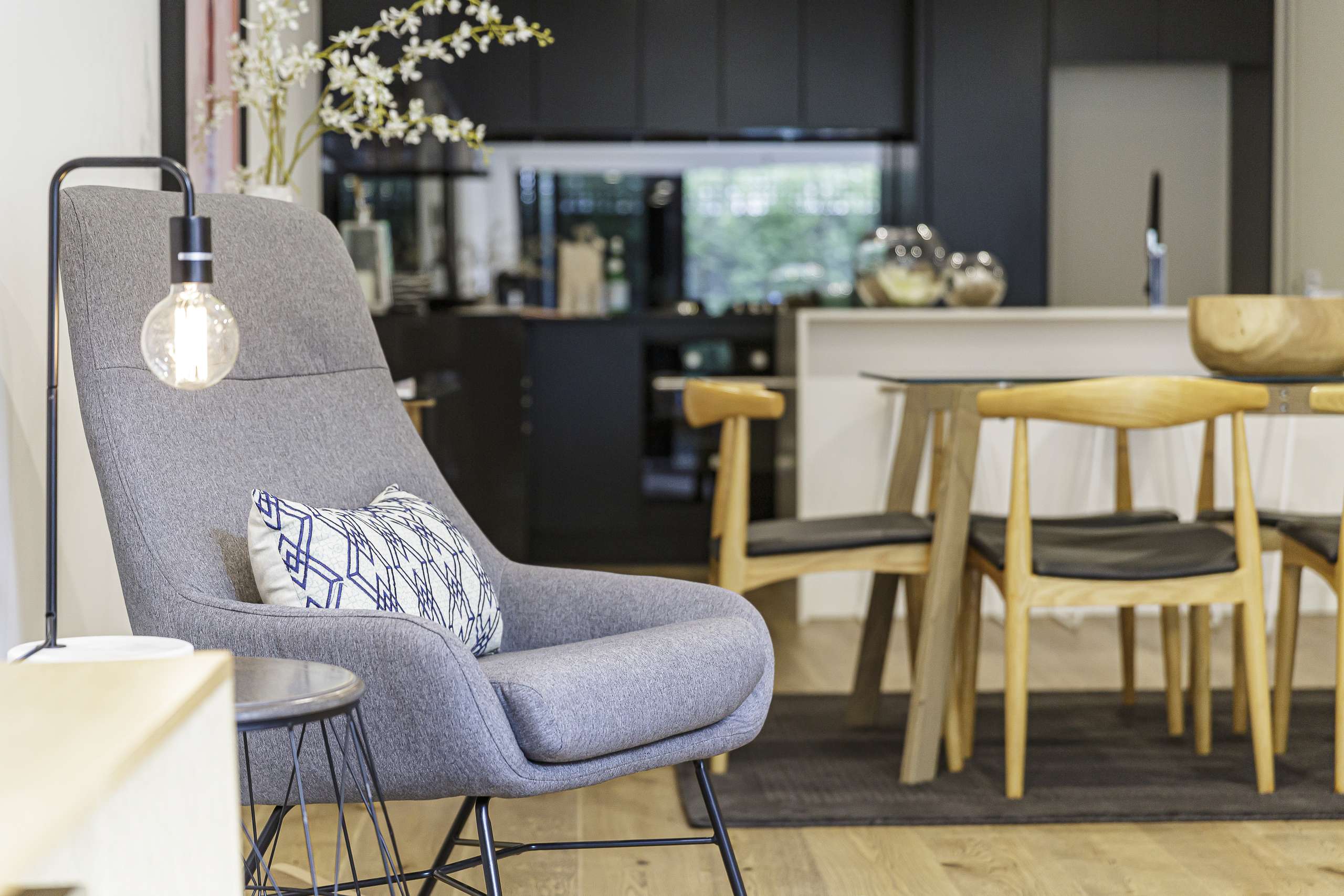
A single room can teach more about interior styling than a whole house, especially at the beginning. Limiting the space makes every choice easier to notice: where the eye lands first, how furniture affects movement, and whether the room feels calm, heavy, bright, or unfinished. Instead of trying to “decorate,” start by studying what the room already does. Stand in the doorway for a minute and look without moving anything. Notice the strongest shape, the darkest area, the emptiest corner, and the object that feels out of place. That first reading matters because styling improves when decisions come from observation rather than impulse.
An easy way to practice is to give yourself one narrow focus for each session. On one day, work only on balance. Move objects so visual weight feels more even from one side of the room to the other. On another day, focus only on height and layering by combining tall, medium, and low elements in one zone, such as a shelf, console, or bedside surface. A different session can be about texture, where you compare smooth, rough, soft, and reflective finishes and see what happens when one surface dominates too much. Keeping the task small helps you notice cause and effect. If the room suddenly feels calmer or more polished, try to identify exactly which change created that shift.
One common mistake is adding more before fixing what is already wrong. A room that feels awkward usually does not need extra candles, cushions, or accessories right away. It often needs subtraction, clearer spacing, or stronger relationships between what is already there. If a corner looks messy, remove half the objects and group what remains by color, material, or shape. If the sofa area feels disconnected, pull pieces closer together before buying anything new. Beginners often mistake fullness for style, but styling becomes stronger when each item has a reason to stay. Editing is not the final polish; it is part of the practice itself.
When you get stuck, take three photos of the same room: one from the doorway, one seated, and one close to a surface you styled. Photos reveal imbalance faster than the eye does in motion. You may notice a lamp that leans visually away from the rest of the composition, a rug that is too small for the furniture arrangement, or a shelf where every object sits at the same height. After looking at the images, change only one thing and photograph again. This makes feedback much more useful, even if it comes from your own review, because you can compare the before and after without guessing what improved.
A simple fifteen-minute practice plan works well here. Spend the first five minutes observing and taking one photo, the next five minutes changing only one area, and the last five minutes comparing the result from the same camera angle. Repeat this several times a week in the same room instead of constantly switching spaces. Repetition in one setting builds a sharper eye because patterns become familiar: you begin to recognize when contrast is missing, when a layout blocks movement, or when a surface feels flat because everything is the same size. Over time, the room stops being just a room and becomes a place where judgment grows through small, visible corrections.